
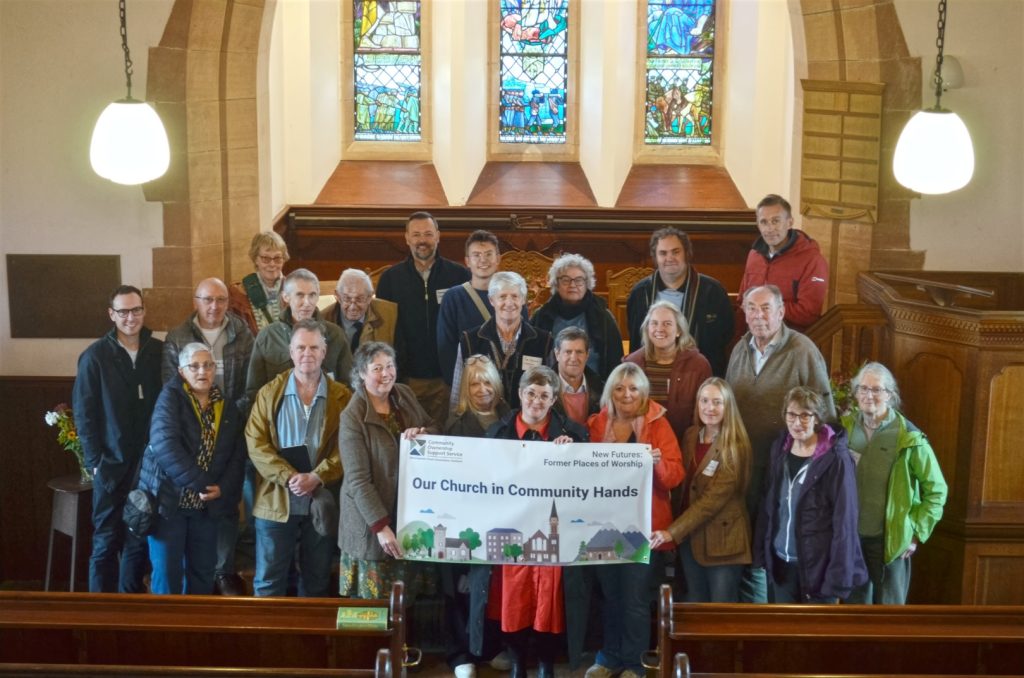
A milestone in the South of Scotland: Fourteen community groups gather at Bedrule Church for an introduction to community ownership of rural church buildings
Two weeks ago, on the 23rd of September 2026, a significant milestone was celebrated at Bedrule Church in the Scottish Borders. The New Futures: Former Places of Worship programme brought together 14 community groups from across the South of Scotland for the first time. The event focused on the care and maintenance of church buildings in community ownership and was delivered in partnership with the Society for the Protection of Ancient Buildings (SPAB). Hosted by Bedrule Church Future, the event also provided an opportunity for collaboration, knowledge sharing, and celebration between the communities who attended, each of which had recently purchased, or had taken significant steps towards purchasing, their local church building.
Practical guidance for community owners
The day’s agenda focused on practical sessions for owning a church building. The day began with Roger Curtis from Bedrule Church Future, who spoke about the group’s journey to acquire the building and how they’ve been running it as a community facility since the purchase. Lucy Stewart from SPAB spoke about how principles of regular maintenance and repair, in line with SPAB’s philosophy, could stave off costly damage down the line and encourage community engagement. Andrew Aldous, Facilities Management Advisor at DTAS, took attendees through the operational must-knows of running an asset, covering topics such as risk assessments, fire and electrical safety. In the afternoon, representatives from SPAB, DTAS and Bedrule Church Future walked attendees through the grounds of Bedrule Church to discuss the challenges the group faced and share their solutions.
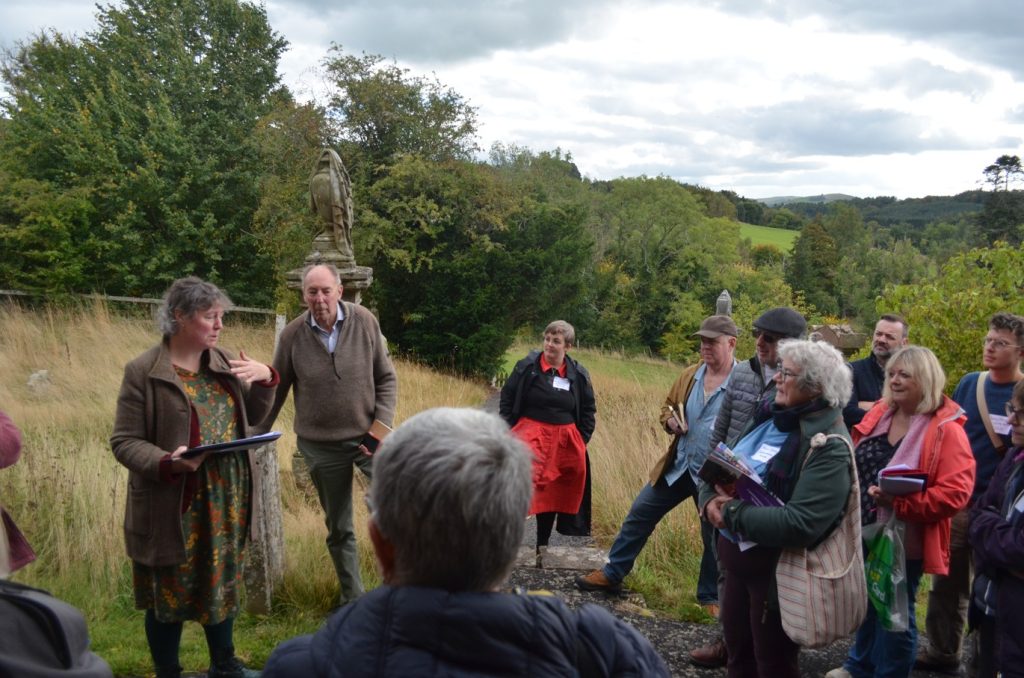
Attendees felt that the event was an important step in their learning as new owners of church buildings. After the difficult and emotive process of purchasing a church, a back-to-basics guide for operating and caring for the building helped groups prepare for their new challenge.
As Fiona Bell from Friends of St Mary’s Hawick put it, “The purchase of a beloved church is an emotive action on so many levels. You raise the money, you have an idea of what you want to do with the building, and everyone rushes to put this in action. But it’s the prosaic that trips groups up. This [event] helped to bring the reality back into planning in a realistic and non-frightening way.”
Why communities are taking ownership?
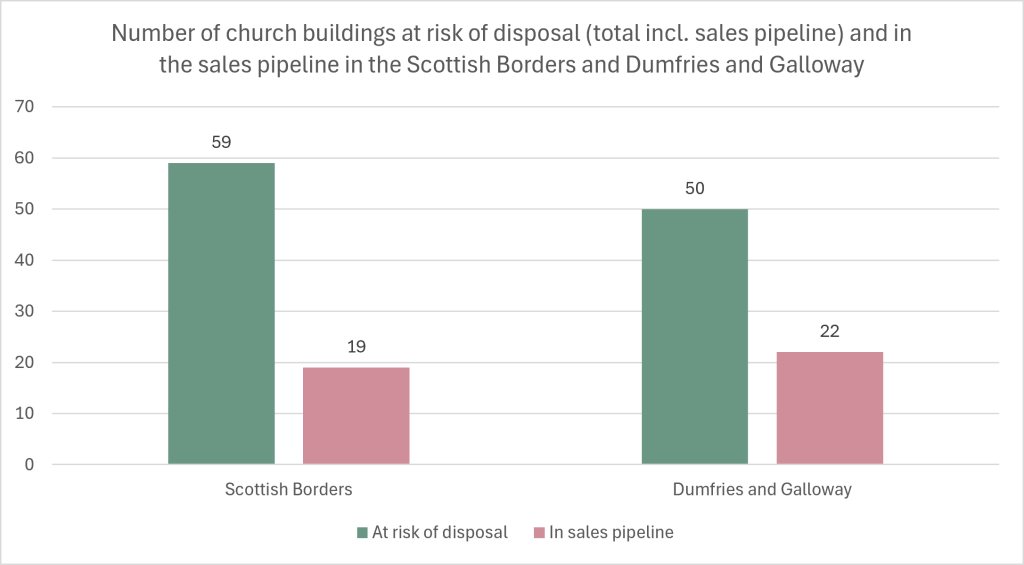
But why have so many community groups found themselves in this position? This gathering took place in the context of an unprecedented nationwide sale of ecclesiastical buildings by the Church of Scotland. Since 2020, at least 41 churches in Dumfries and Galloway and the Borders have been put on the open market or otherwise sold. Based on the contents of the Church of Scotland’s Presbytery Mission Plans, as many as 68 church buildings in this area could still be at risk of disposal. In response, dozens of communities have rallied together to keep their churches in local hands. The New Futures programme, part of DTAS’s Community Ownership Support Service, was created to help community groups make informed decisions about acquiring church buildings and running them as sustainable community assets. So far, the programme has supported well over a hundred groups and continues to receive new enquiries.
Sharing knowledge and supporting each other
For community groups, caring for a heritage asset has upsides; beloved buildings can draw high levels of local support and fundraising. However, maintaining a historic church building is also a unique challenge with a steep learning curve. As churches leave the ownership of the Church of Scotland, they face significant upheaval. Settled systems like maintenance schedules, insurance arrangements, and the safety net of a consolidated fabric fund are overturned. When the building enters community ownership, groups often find themselves dealing with these newfound pressures alone. Could communities working together, sharing their experiences and supporting each other, be the solution to these challenges? Overwhelmingly, attendees thought so.
Feedback highlighted the importance of coming together as a group to share knowledge and experiences. Alan Bailey, Chair of Bedrule Church Future, said that this event “showed the potential for new or potential owners of churches to combine efforts and share experiences and information,” and hopes that it will “be a starting point for some long-term cooperation and mutual support.” Conversations on the day included sharing experiences with different insurance brokers and different ways of making the church buildings more accessible.
A majority of attendees reported that they planned to reach out to other groups from the event after the fact, continuing the learning and support initiated by the New Futures programme.
This was the first time these groups had gathered, but the New Futures programme hopes it won’t be the last. Even at their first meeting, attendees couldn’t help but brainstorm potential collaborative projects like a community-owned “Churches Trail” for the South of Scotland. However, whether these ideas translate into action remains to be seen. But in the words of Lizzie Swarbrick, Research Manager at Research in Action on Church Heritage, this event has the potential to be “the start of a collaborative community with people caring for churches learning from each other.”
Support for communities considering ownership
There are dozens of church buildings now in community ownership and hundreds still at risk of disposal across Scotland. If you or your community are considering purchasing a church building, please contact the New Futures: Former Places of Worship programme.
The New Futures: Former Places of Worship programme is funded by Historic Environment Scotland, the National Lottery Heritage Fund, and Development Trusts Association Scotland.
For any questions about this blog or the New Futures programme, please contact Addie Maher, Churches Programme Officer, at addie.maher@dtascot.org.uk.